AI Medical Diagnostic Platform
Deep learning transfer learning system detecting early-stage Alzheimer's from MRI brain scans with 94%+ accuracy
Overview
A computer vision diagnostic tool engineered to assist healthcare professionals and medical researchers in detecting early-stage Alzheimer's Disease from axial MRI neuroimaging scans.
The Clinical Problem
Early detection of neurodegenerative conditions is vital for patient intervention and clinical planning, yet:
- Manual Review Bottlenecks: Radiologists and neurologists review hundreds of high-resolution scan slices daily, leading to diagnostic fatigue.
- Subtle Early Indicators: Very mild cognitive impairment presents subtle textural nuances that can be challenging to differentiate in early stages.
- Need for Assistive Triage: Healthcare facilities require reliable AI triage tools to highlight potential anomalies and prioritize urgent cases.
The Technical Solution
- State-of-the-Art Architecture: Leveraged EfficientNet-B3 via transfer learning, optimized specifically for fine-grained biomedical image classification across multiple disease progression stages (Non-Demented, Very Mild, Mild, and Moderate Demented).
- Advanced Preprocessing Pipeline: Applied contrast normalization, Gaussian filtering, and dynamic data augmentation to mitigate class imbalance and improve generalizability.
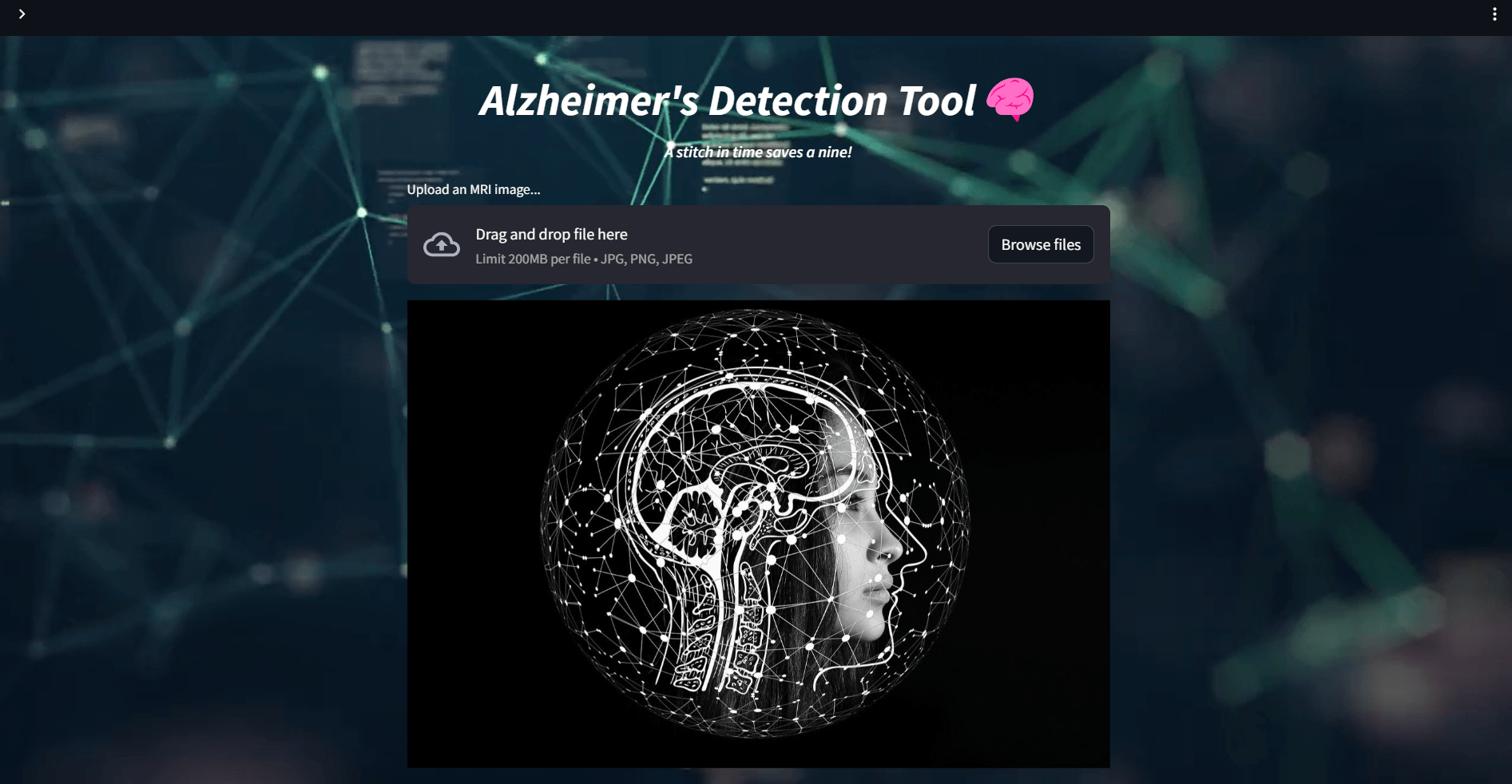
- Clinician-Facing Interface: Built an interactive web application with Streamlit where medical staff can upload DICOM/PNG brain scans and receive instant classification probabilities with visual confidence distributions.
Impact & Performance
- Diagnostic Sensitivity: Achieved 94%+ validation accuracy across multi-class MRI dataset benchmarks.
- Instant Triage: Reduced scan classification inference time to under 300 milliseconds, enabling real-time assistive triage in clinical research workflows.
- Accessible Deployment: Fully containerized and hosted for global research accessibility on Hugging Face Spaces.